


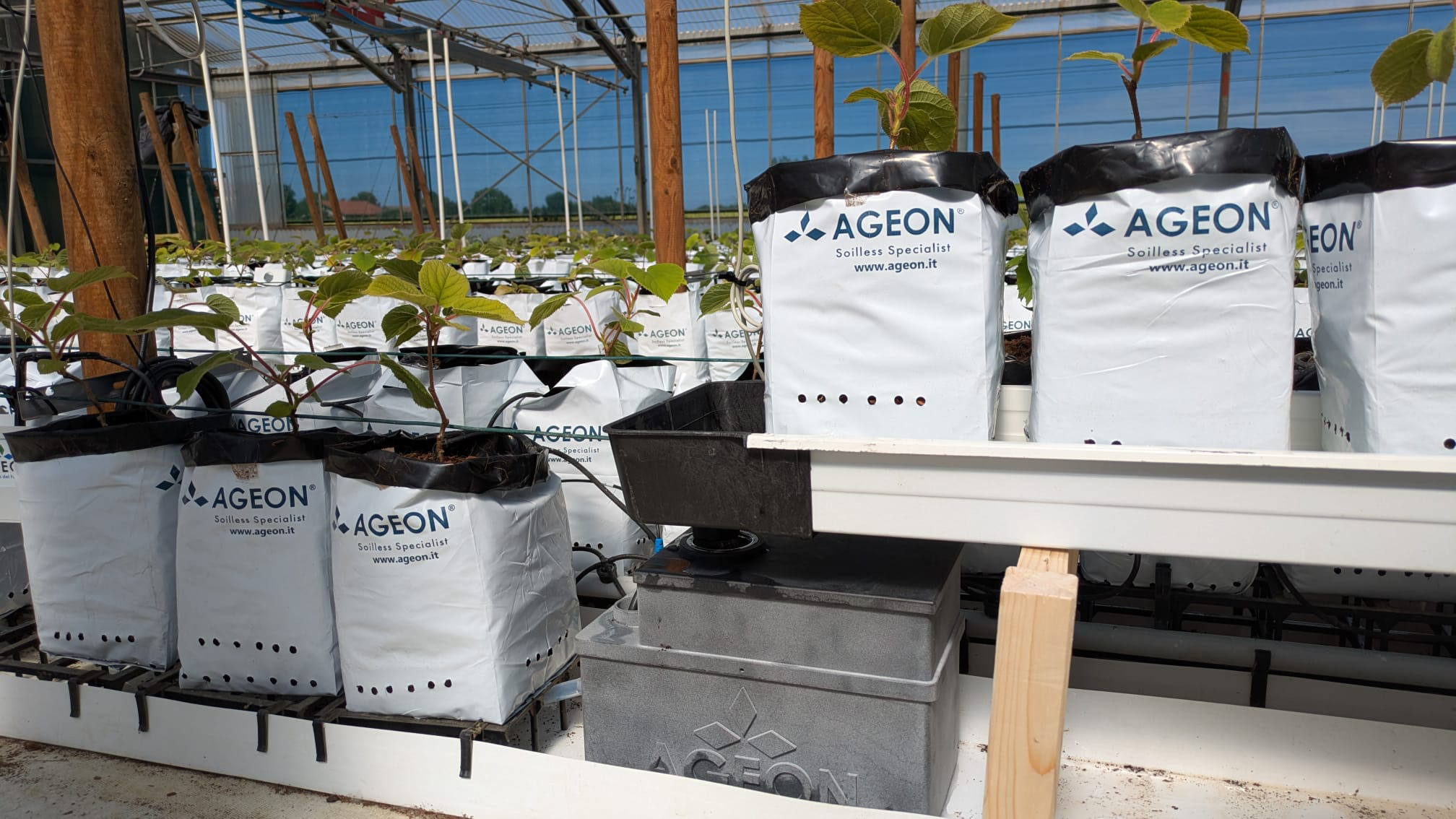
Multiparameter drainage box
Our multiparameter drainage box is able to carry out three functions simultaneously. In addition to measuring the quantity drain water from the substrate after irrigation, it can also monitor electrical conductivity (thanks to our water EC meter) and pH levels (thanks to our water pH meter) of the drainage water. By combining drainage data with irrigation volume measurements, MyAgeon platform allows you to visualize drainage for each irrigation and calculate the daily drainage percentage.
This sensor is designed to perform three functions at the same time.
It measures drainage volume, electrical conductivity (with our water EC meter), and pH (with our water pH meter) thanks to dedicated holders for optimal installation of each probe. This makes it possible for them to be always submerged in a minimal and proper amount of water on all sides, ensuring they come into contact with the most recent drainage water.
This sensor is structured to hold a minimal amount of water, which is continuously refreshed. This offers significant advantages over larger containers, as it allows the probes to provide accurate and reliable data. Furthermore, two filters continuously clean the water, keeping the probes clean, precisely calibrated, and ensuring a long lifespan.
The box is constructed from an inert material that does not interfere with EC or pH measurements and are resistant to acidic or highly saline water.
Each box can measure the drainage volume from 2/3 slabs or 3/4 pots, using a self-emptying spoon (equipped with a screw). More concretely, a specific number of turns of the screw will adjust the flow rate of water to the spoon, and an impulse counter tracks the number of times the spoon empties, sending the data to the Base Station via radio waves to calculate the total drainage volume.
By combining drainage data with irrigation volume measurements, you can calculate and visualize the amount of drainage for each irrigation and daily drainage percentage on MyAgeon platform.


RED: DRAINAGE VOLUME
GREEN: IRRIGATION VOLUME
Column width: duration of irrigation / drainage
Column height: volume of irrigation / drainage
The compact design of this drainage box facilitates installation and ensures optimal placement of EC and pH meters.
FOR PROPER INSTALLATION, YOU WILL NEED:
- 2/3 test slabs (the gutter will be suspended or with stands) or 3/4 test pots
- Plug for the gutter to channel drainage into the box
Position the drain tube of the gutter inside the box through the dedicated top hole with the filter, making sure the whole drainage is correctly channeled inward. To prevent solar exposure and subsequent algae growth on the metal mesh filter, position the box so that the gutter completely shields it from sunlight. Nevertheless, regular filter cleaning is recommended.
The gutter should be sufficiently inclined to allow drainage to flow smoothly into the box.
Once the test gutter is overlaid on an pre-existing gutter, and after filtering and measuring the drainage, it can be directed onto the pre-existing channel through a drainage tube, or collecteded in a separate container for more in-depth EC and pH analysis (Figure 1 and 2).


RADIO TRANSMITTER PLACEMENT
Correct sensor installation is crucial to obtaining accurate and reliable data. Note that the cable connecting the pulse counter to the transmitter is 1 meter long. Therefore, you will not be able to place the radio transmitter above the plant canopy (a necessary requirement for all sensors). To ensure optimal data transmission, place the sensor within 200-300 meters away from the Base Station, avoiding plant barriers.
As an alternative, a longer cable can be requested to allow correct placement of the transmitter above plant height.
Documents:
Brochure

Datasheet:
Similar products:

T-probe sensor
This sensor measures soil and water temperature, whether static or flowing. It is suitable for…

T/RH sensor
Sensor for measuring air temperature and relative humidity in indoor environments, battery-powered…

WET150 – soil sensor
The WET150 soil sensor measures temperature, electrical conductivity, and water content in soil or…

Water pH meter with electrode
The water pH meter features a probe containing a high-precision glass/ref combination pH electrode,…

Water EC meter with probe
The water electrical conductivity meter includes a high-precision 4-electrode probe, a display…

Weight sensor with frame
This precision weighing sensor features easy leveling to ensure consistency and wirelessly monitor…

Irrigation meter
Our irrigation meter is used to accurately determine the amount of water supplied to the plants.…

Drainage meter
Our drainage meter provides precise measurements of the amount of water that is not absorbed by…

Soil moisture sensor
This sensor provides soil moisture measurements. Perfect for cost-effective monitoring of potted…